How Audiences Are Shifting from Mainstream to Creator Media: The Data Behind the Change
What's Happening in the Media Landscape
Over the past decade, we've seen a significant shift in how audiences consume media. Traditional broadcast television is declining while creator-led platforms are growing rapidly. Understanding these trends is essential for anyone working in communications, marketing, or media strategy.
This analysis breaks down the key data points showing where audiences are moving and what this means for the media industry. We'll examine advertising trends, viewership patterns, and demographic shifts to provide a clear picture of the current media landscape.
The Money is Moving to Creators
One of the clearest indicators of this shift is advertising spending. Brands are allocating more budget to creator-led platforms and less to traditional media channels.
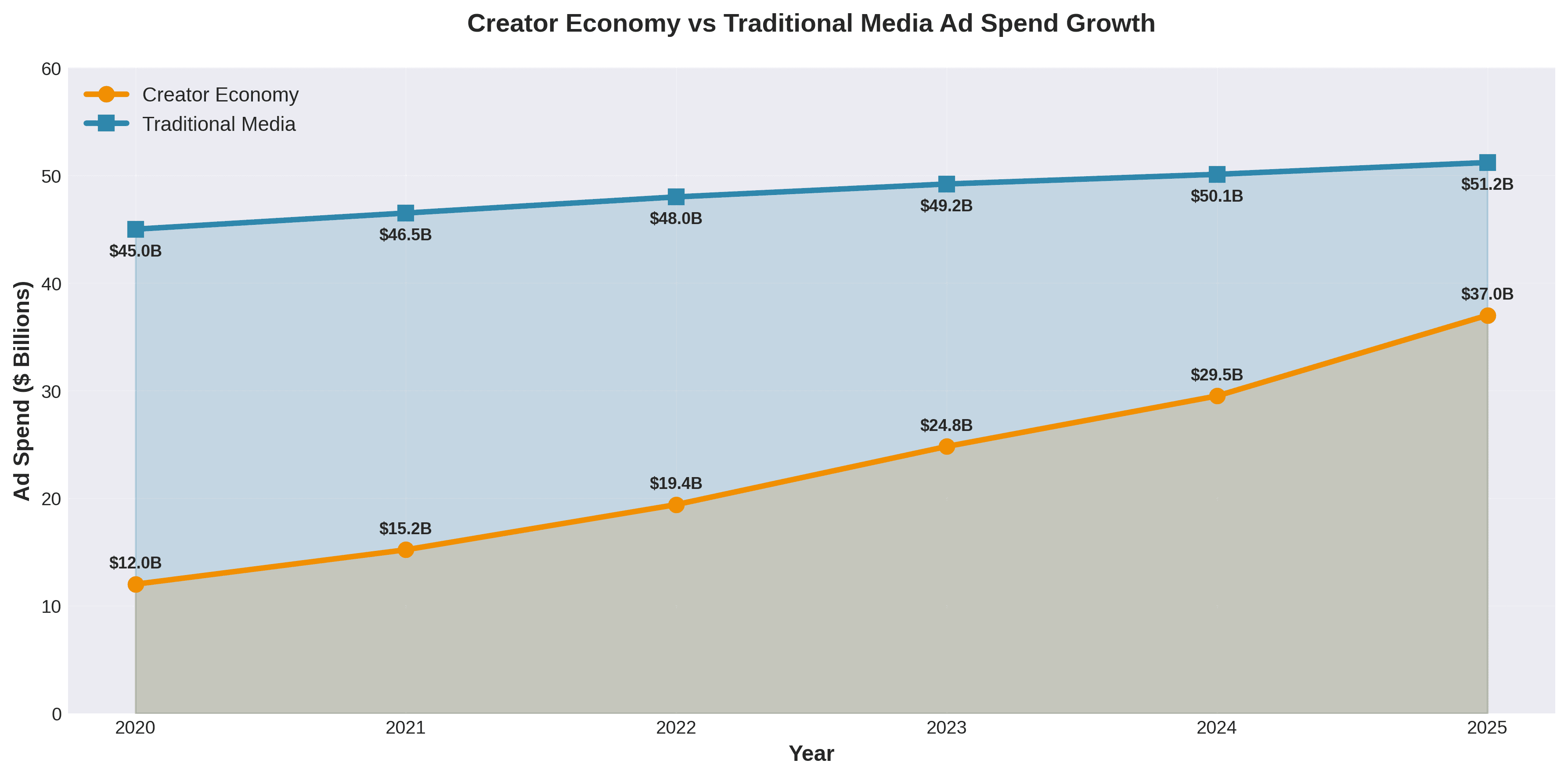
Creator economy advertising is projected to reach $37 billion in 2025, growing at 26% year-over-year. By comparison, traditional media advertising is growing at just 5% annually. This means the creator economy is expanding at a rate four times faster than the traditional media industry.
This gap in growth rates reflects where advertisers believe they can reach their audiences most effectively. As audiences migrate to new platforms, advertising budgets follow.
Traditional Broadcast Television is Declining
Prime-time broadcast television viewership has dropped significantly over the past decade. The major networks have all experienced substantial audience losses.
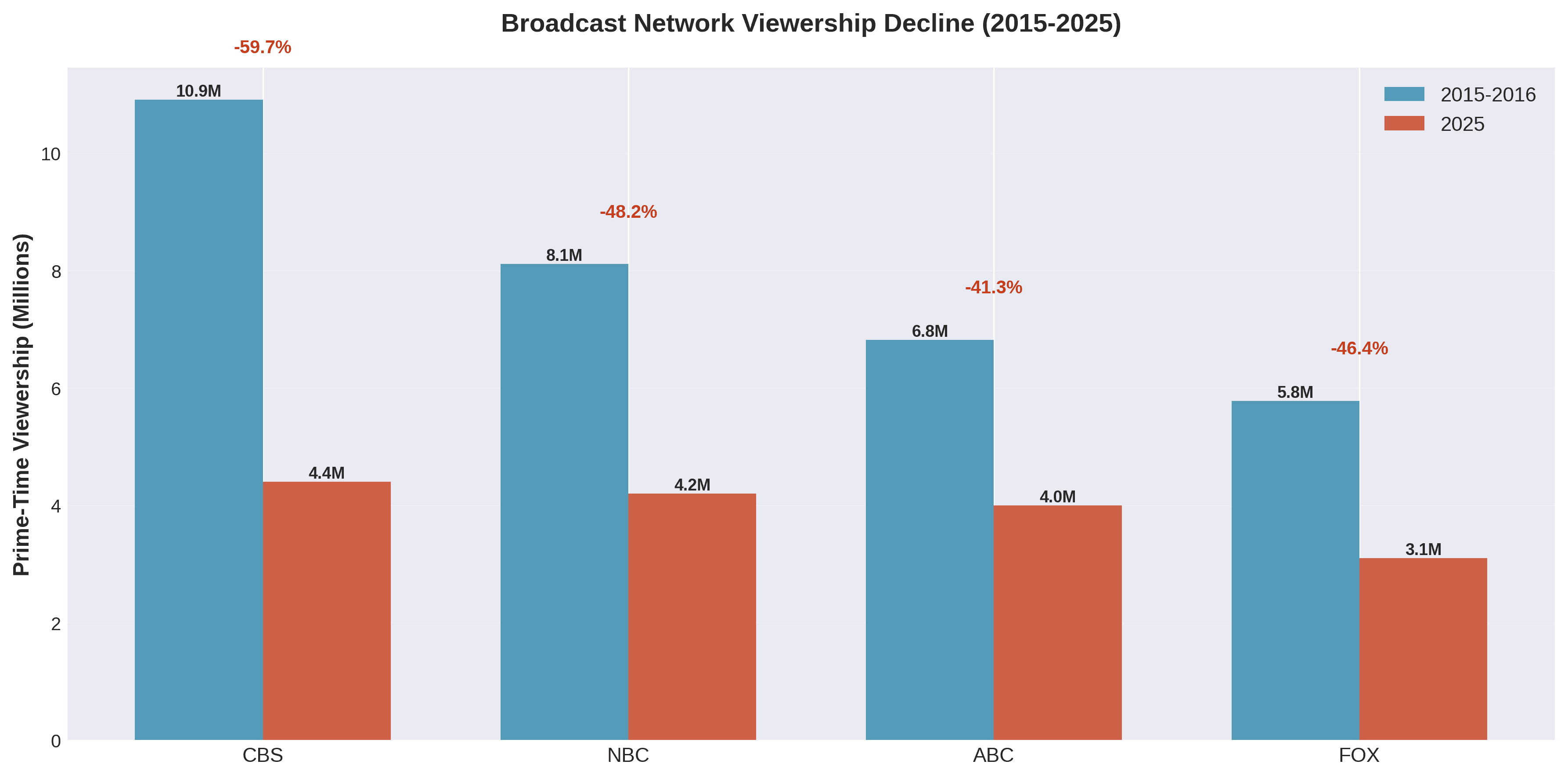
Between 2015-2016 and 2025, the combined prime-time viewership for ABC, CBS, FOX, and NBC fell from 31.62 million to 15.7 million viewers. Here's how each network performed:
Network | 2015-2016 Viewership | 2025 Viewership | Change |
|---|---|---|---|
CBS | 10.91M | 4.4M | -59.7% |
NBC | 8.11M | 4.2M | -48.2% |
ABC | 6.82M | 4.0M | -41.3% |
FOX | 5.78M | 3.1M | -46.4% |
This represents a fundamental change in how people access entertainment and information.
Streaming Platforms are Growing
As traditional broadcast viewership declines, streaming services are capturing more of the audience's attention. In May 2025, streaming reached a historic milestone.
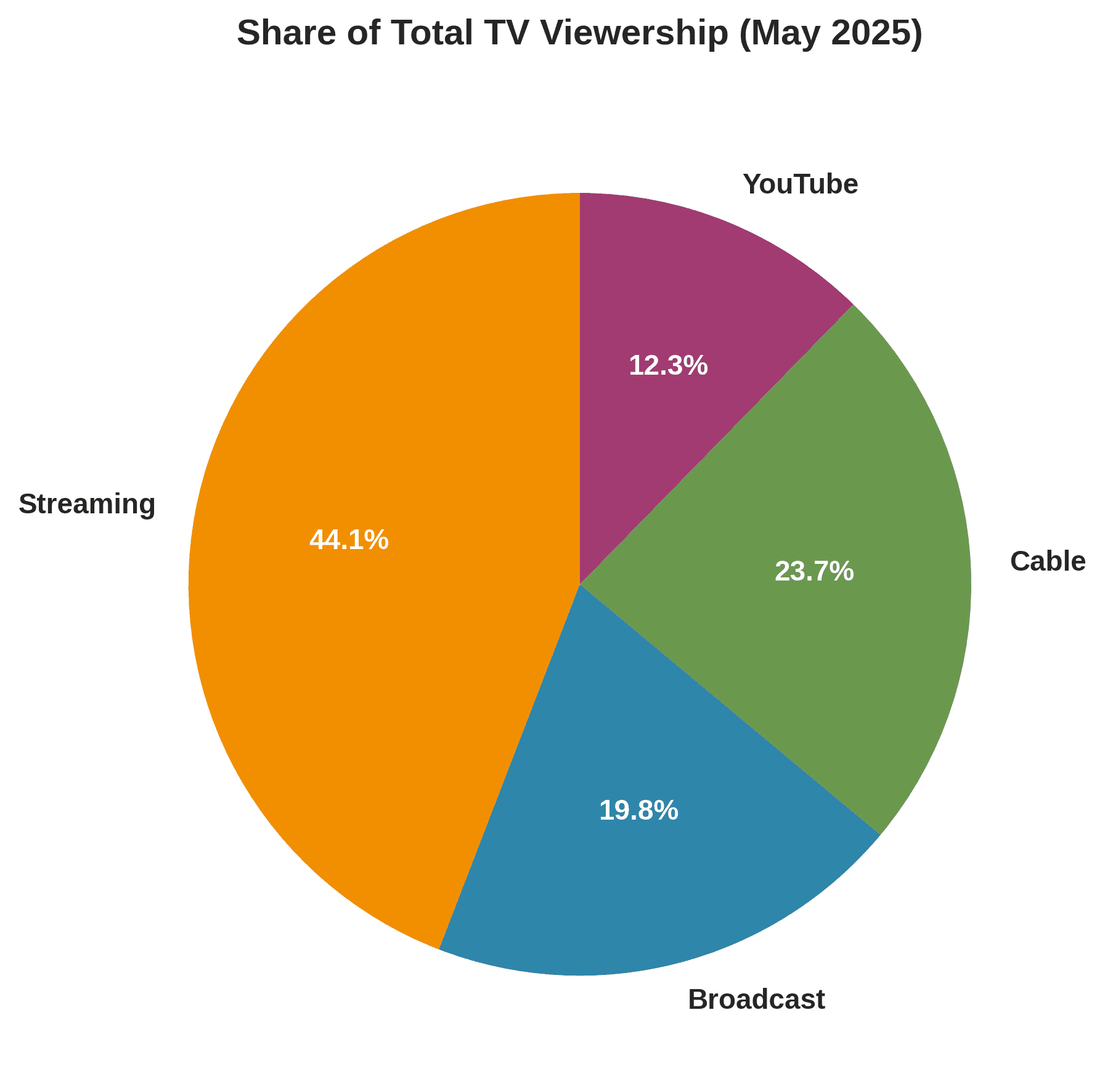
For the first time, streaming's share of total television usage (44.8%) surpassed the combined share of broadcast and cable (44.2%). This represents a significant shift in how people watch video content. Since May 2021, streaming usage has grown 71%, while broadcast viewership declined 21% and cable viewership fell 39%. YouTube alone accounts for 12.5% of all television viewing, making it larger than any individual broadcast network.
How People Spend Their Media Time
When we look at the total time people spend consuming media each day, digital platforms now dominate.
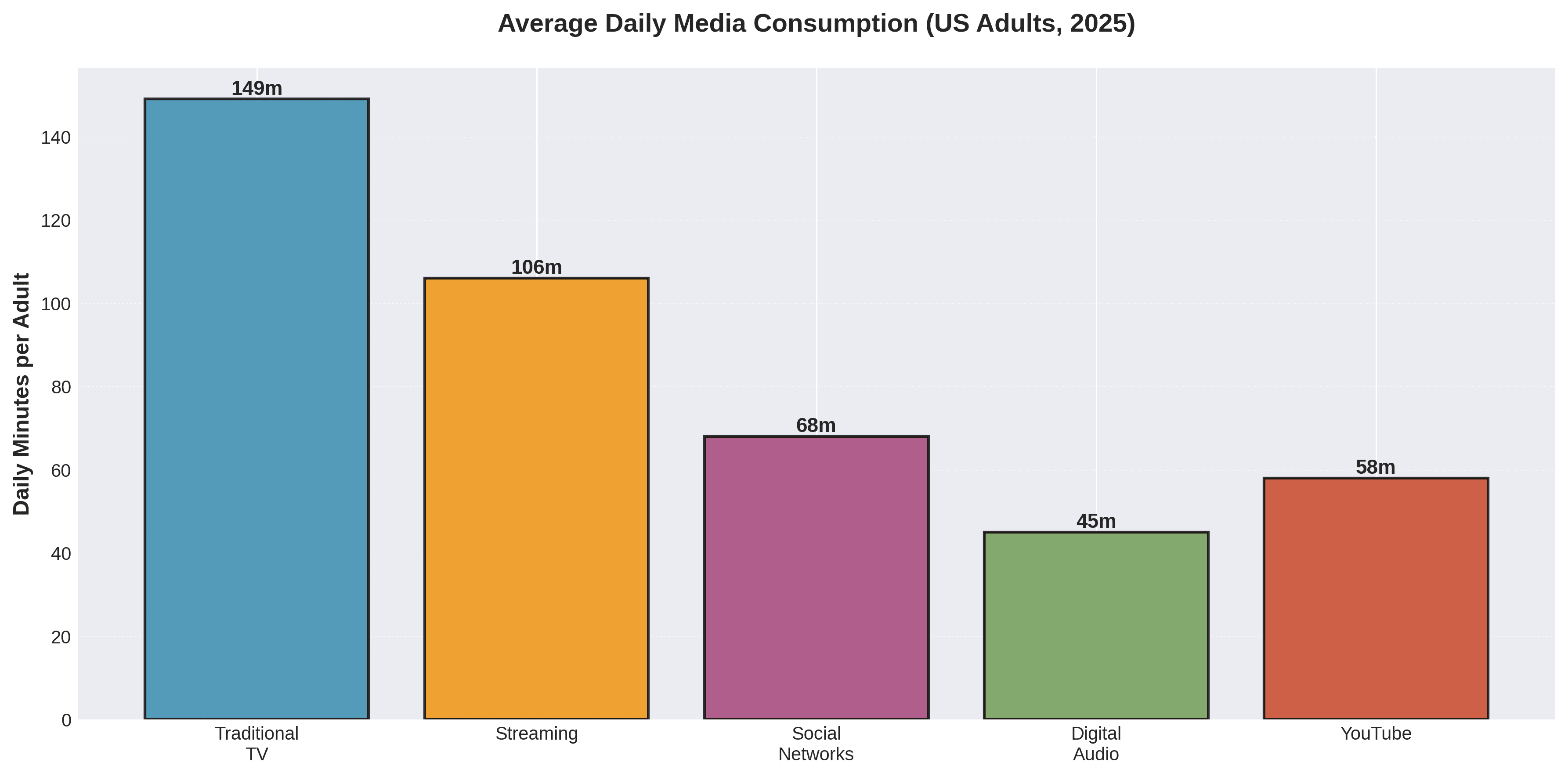
The average US adult spends 2 hours and 29 minutes per day watching traditional television. By contrast, they spend a combined 4 hours and 37 minutes on subscription streaming, social networks, digital audio, and YouTube. This means digital platforms collectively receive more than twice as much daily attention as traditional TV.
Age Matters: Generational Differences in Media Consumption
The shift away from traditional media is not uniform across all age groups. Younger audiences have adopted digital platforms much more rapidly than older audiences.
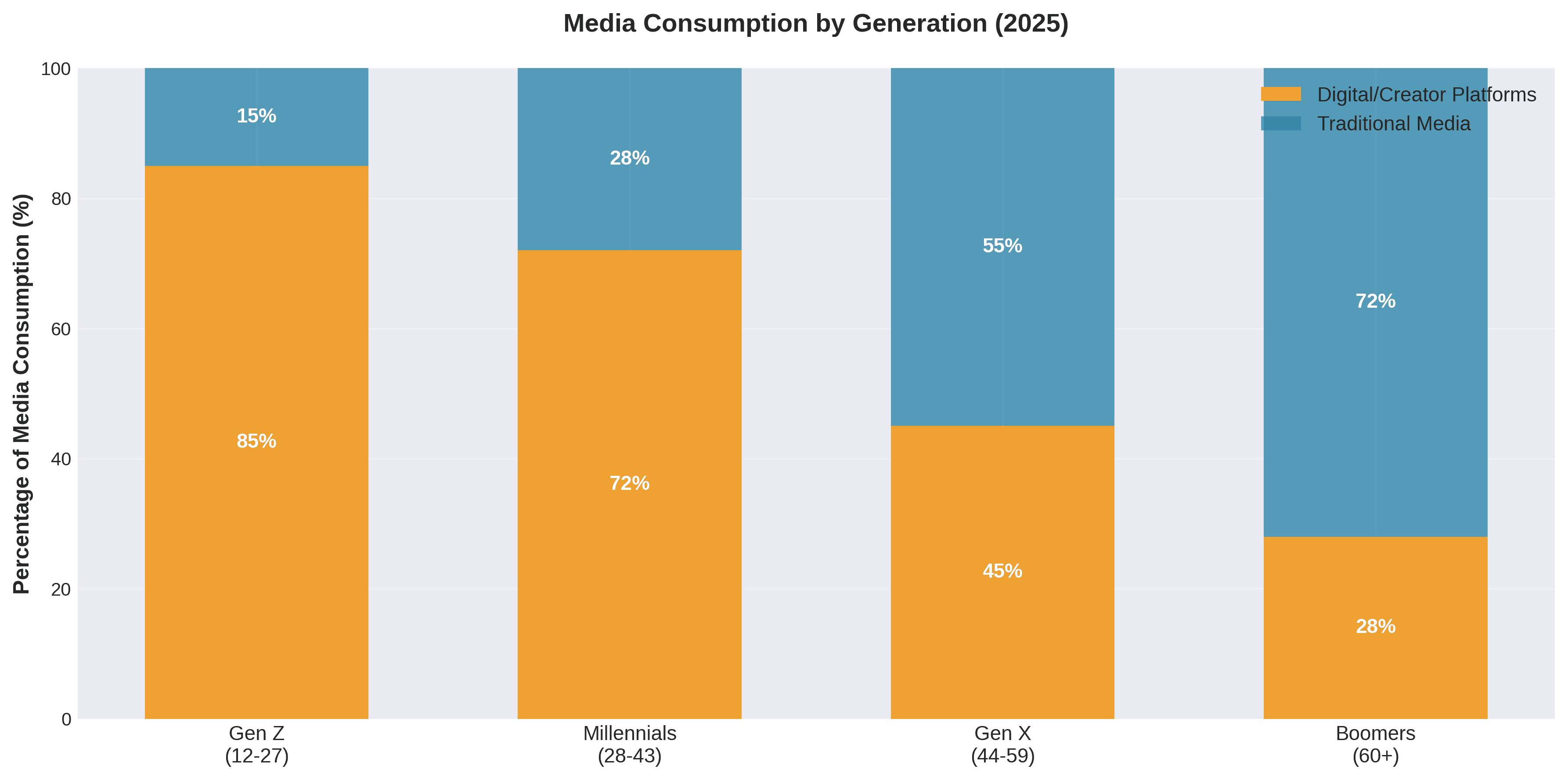
For Gen Z (ages 12-27), the shift is nearly complete. In 2025, 85% of their media consumption occurs on creator and digital platforms. This represents a dramatic change from 2015, when traditional media still held a significant share of their attention.
Research shows that nearly one in three Gen Z adults never watch linear TV at all, and over half spend three or more hours per day on social media. This generational difference is important because it suggests that current trends will likely accelerate as younger audiences become the dominant consumer group.
The Volume of Content Being Created
One significant factor driving the shift to creator platforms is the sheer amount of content being produced. Creator-led platforms generate far more content than traditional media.
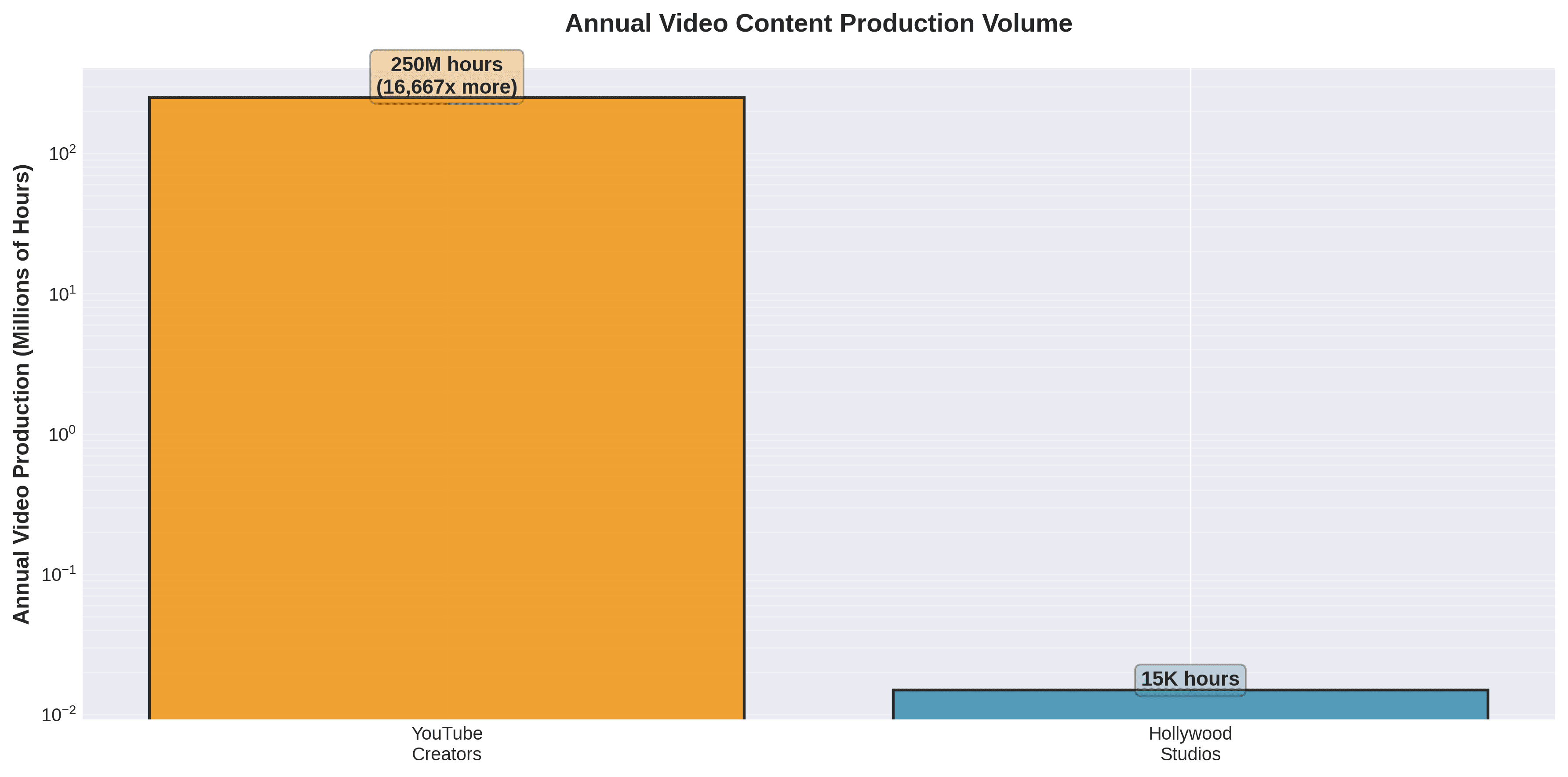
YouTube creators upload approximately 250 million hours of video annually. This is 16,667 times more than the 15,000 hours produced by the entire Hollywood film and television industry. This massive volume of content means there's something available for virtually every interest and niche.
Key Milestones Over the Past Decade
The shift from traditional to creator-led media has happened gradually, with several important turning points.
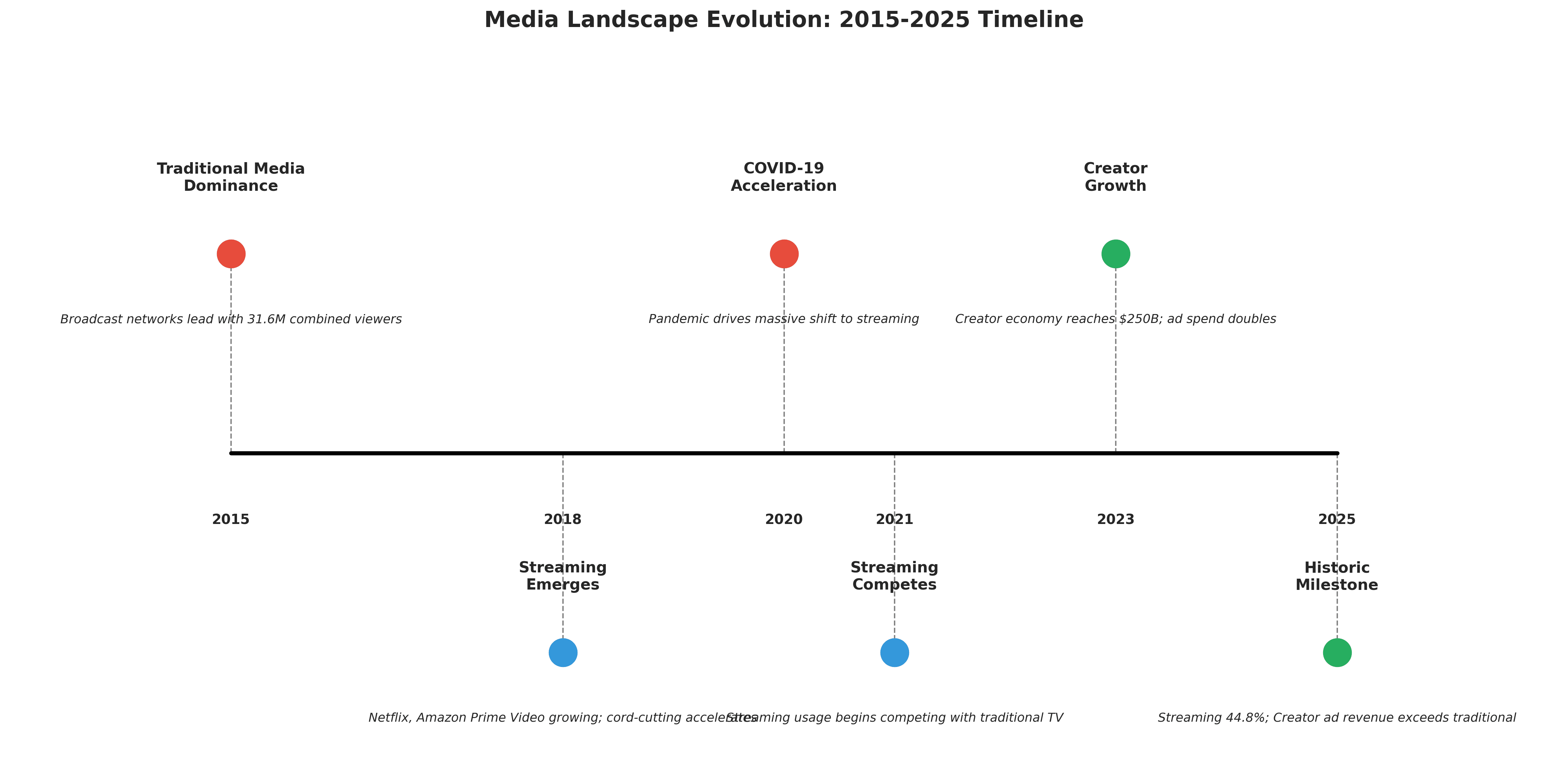
The COVID-19 pandemic in 2020 accelerated the move to streaming and at-home entertainment. By 2023, the creator economy had reached a market size of $250 billion. In 2025, creator economy advertising revenue is projected to surpass traditional media for the first time.
The Bottom Line
The audience has moved. Streaming now dominates television. Creators produce vastly more content than traditional media. Gen Z has almost completely abandoned broadcast television. And advertisers are allocating budgets accordingly, with creator platforms growing four times faster than traditional media.
This is not a temporary shift. It is the new baseline. For communications professionals, marketers, and media strategists, the question is no longer whether to adapt to this landscape, but how quickly you can do it.
Related posts